A Walk Through History
One Assassin walks through sixteen centuries of picture-making, from illuminated manuscript to gold-leaf screen. Every pixel and every note is generated live in the browser.
- 2026
- Custom software (Canvas 2D, Web Audio). No bitmaps, font files or audio samples; one HTML file of about 480 KB
- A 1920 × 1080 stage, letterboxed to the window
- A 67.2-second loop: sixteen pictures of 4.2 seconds, the last leap landing back in the first
- Space, or a click on the picture, to play and pauseDrag the timeline to scrub; arrow keys step a second, with Shift fiveG between the sixteen-up grid and one picture; click a cell to enter it, Esc to go backIn a single picture, scroll or pinch to zoom from 1× to 4× and drag to pan; double-click, 0 or Esc to resetM to mute
- Concept, art direction: Kyle Xu
- A fan tribute, non-commercial. Assassin's Creed and its characters are trademarks of Ubisoft; no Ubisoft images, text or music are used, and the score is original.
Statement
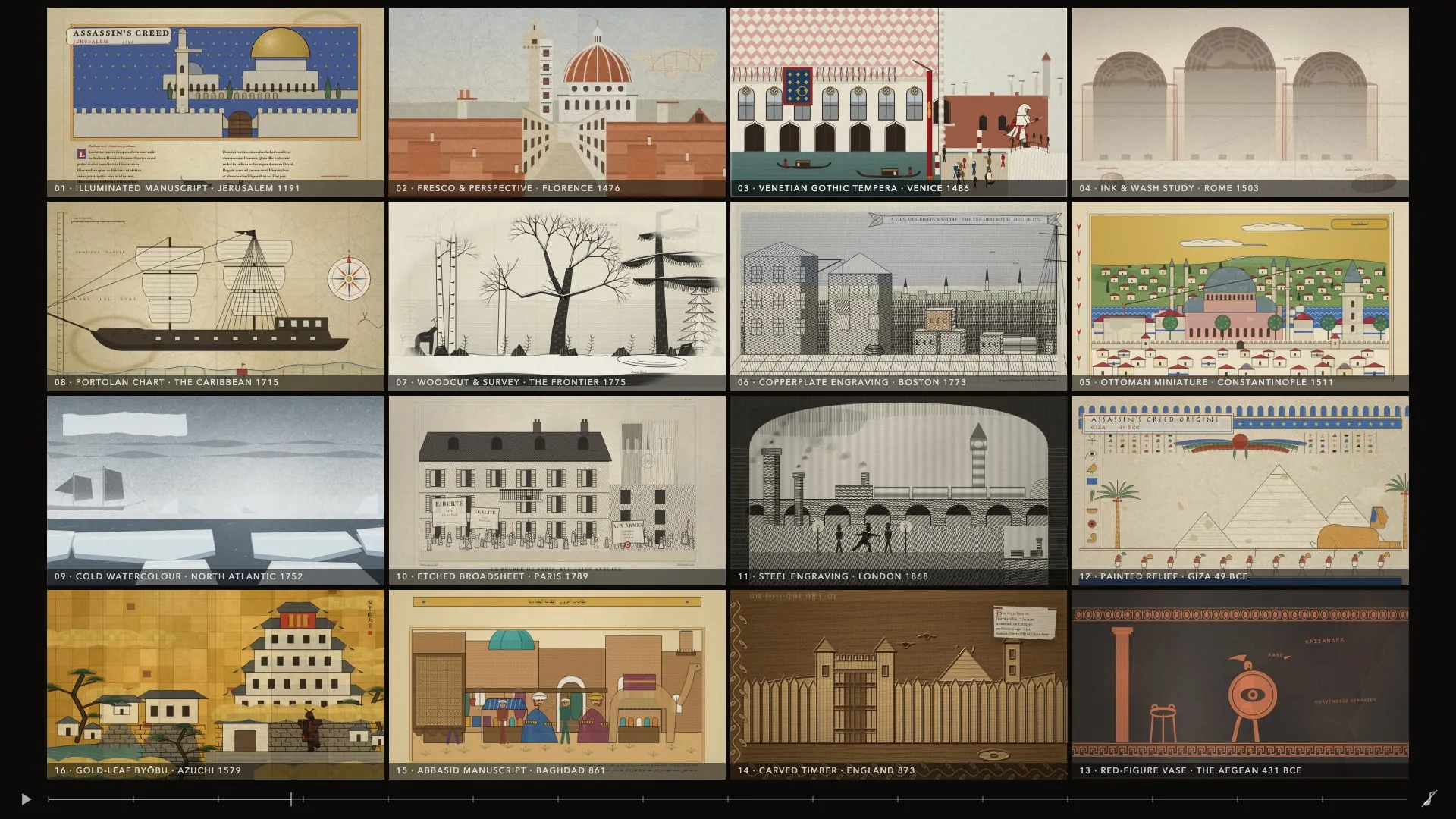
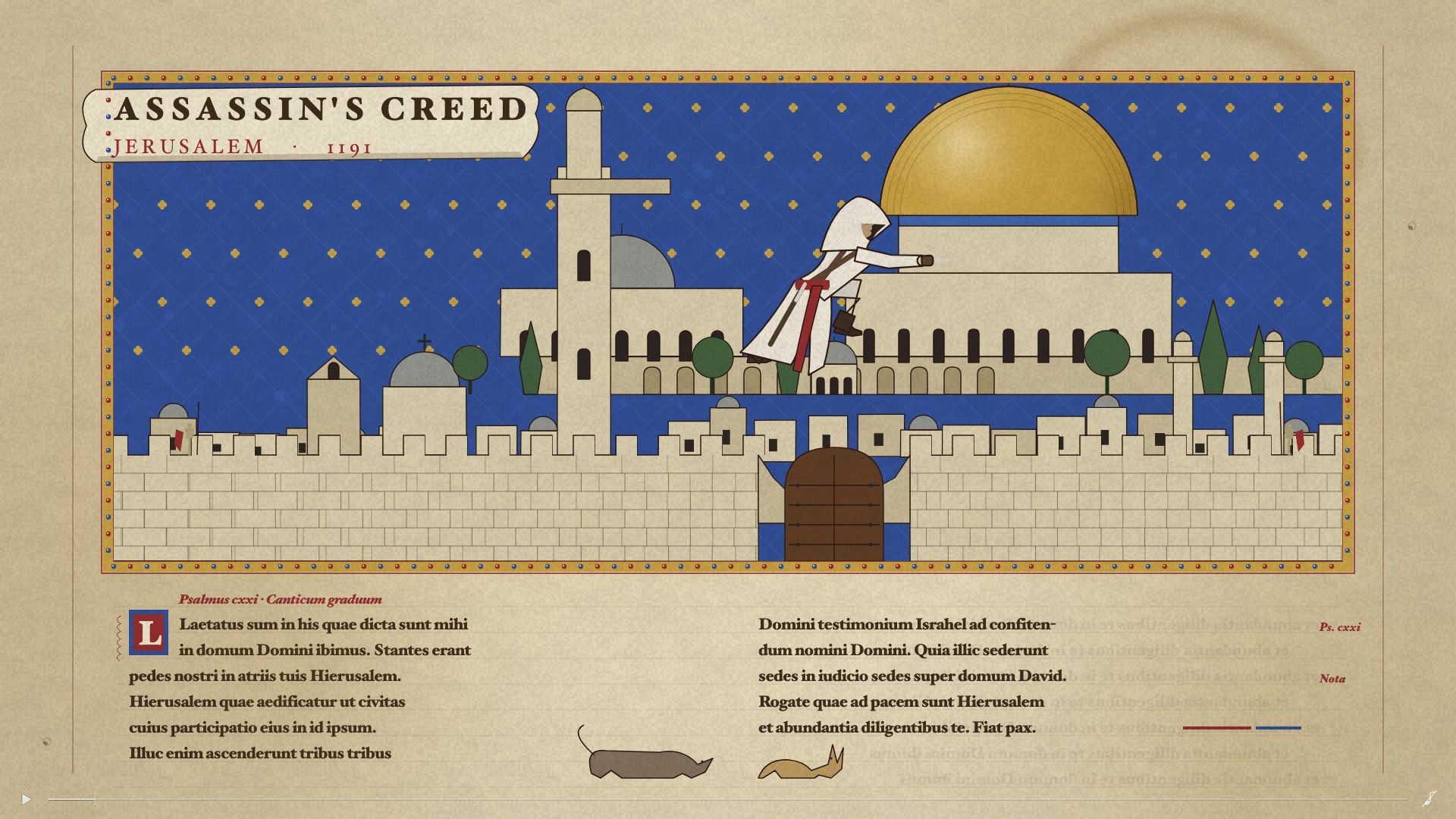
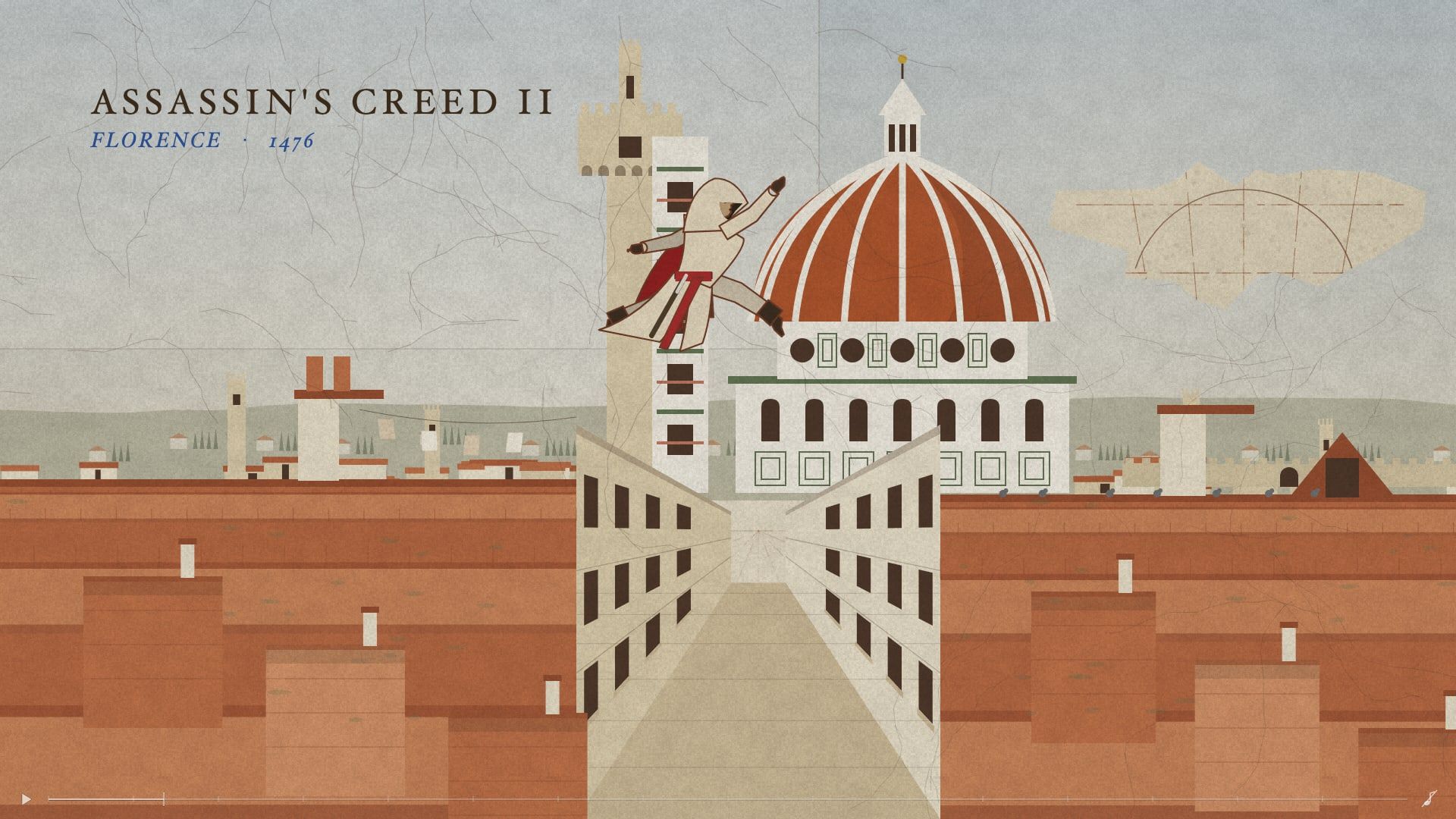
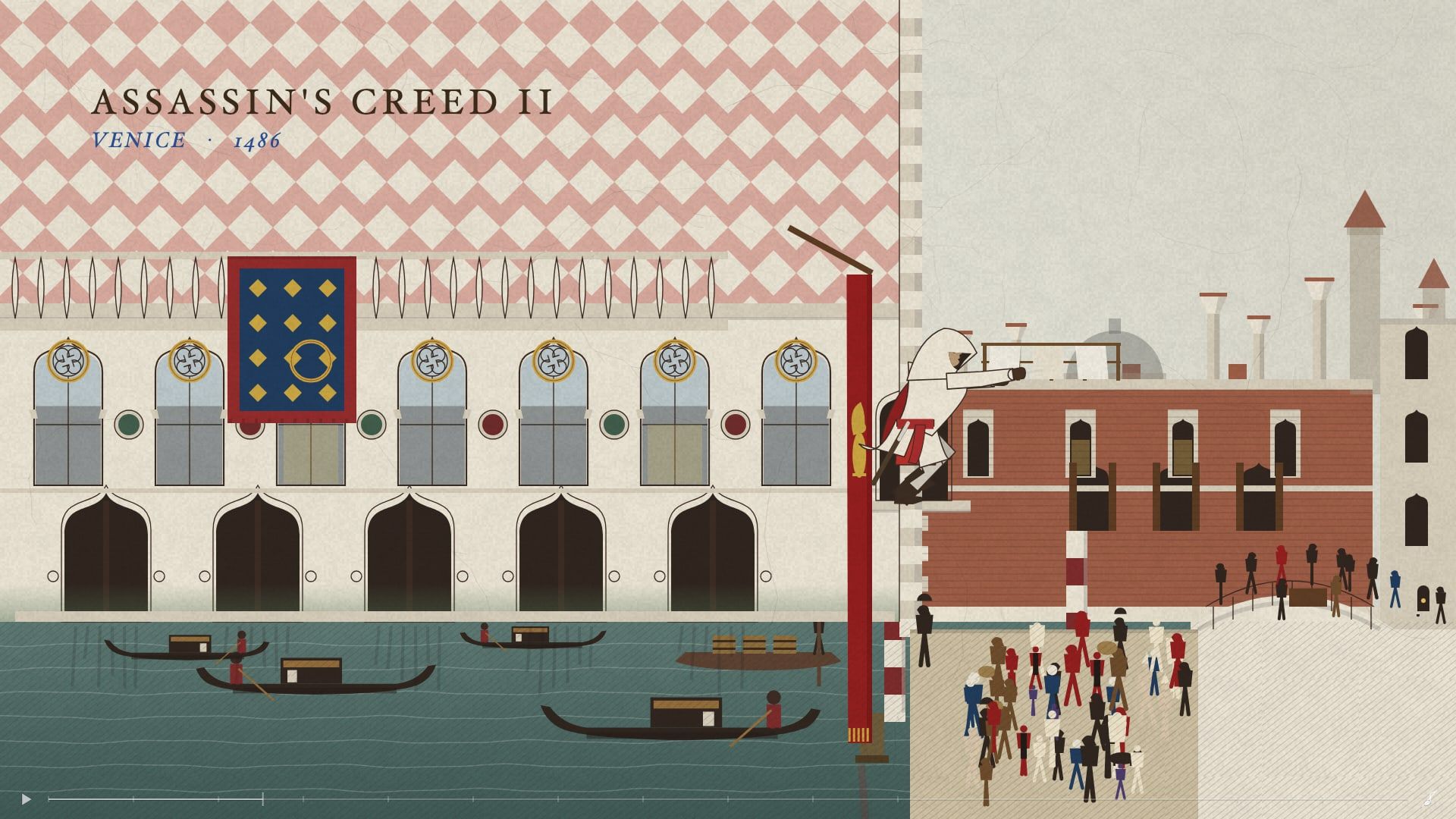
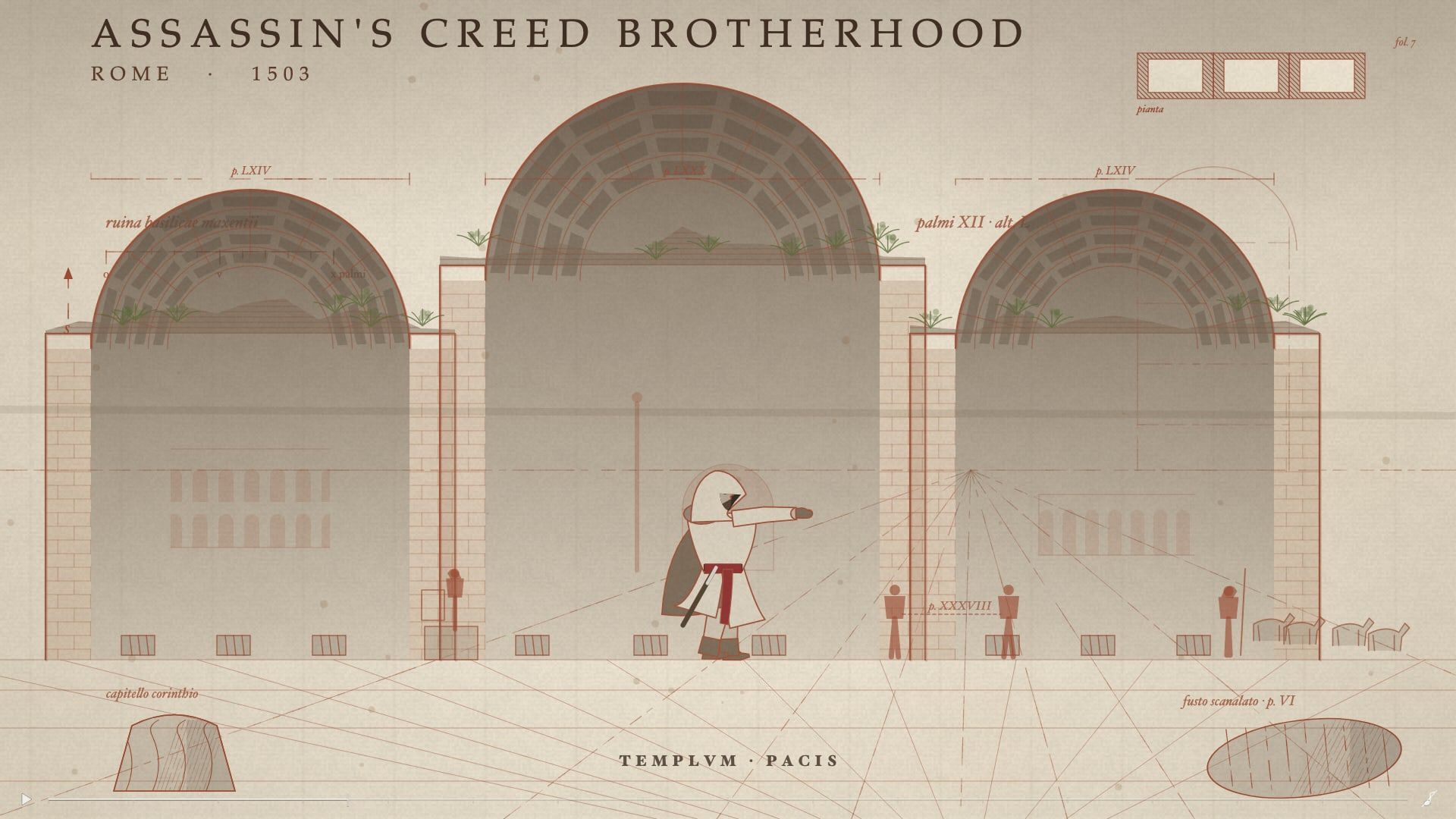
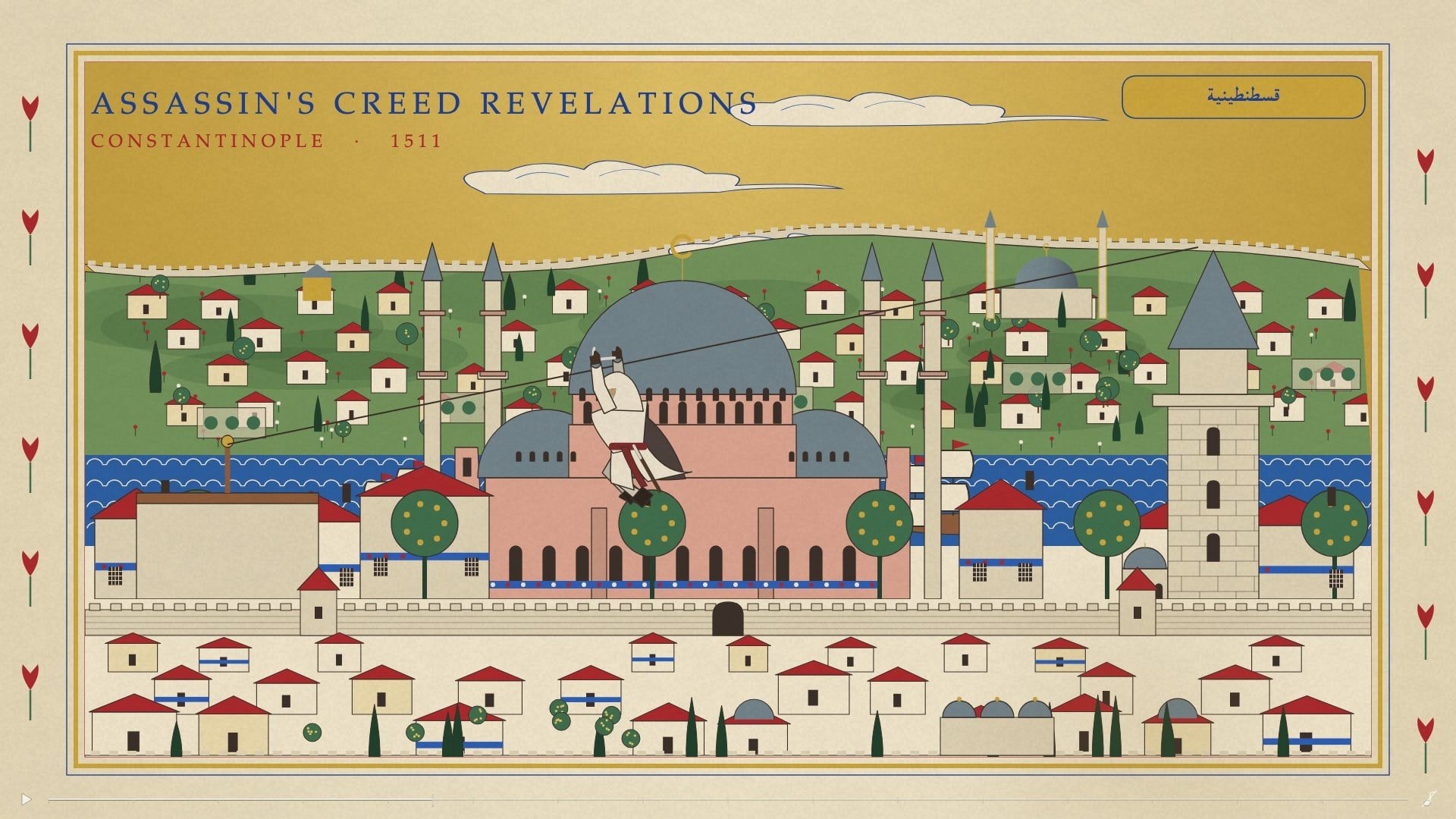
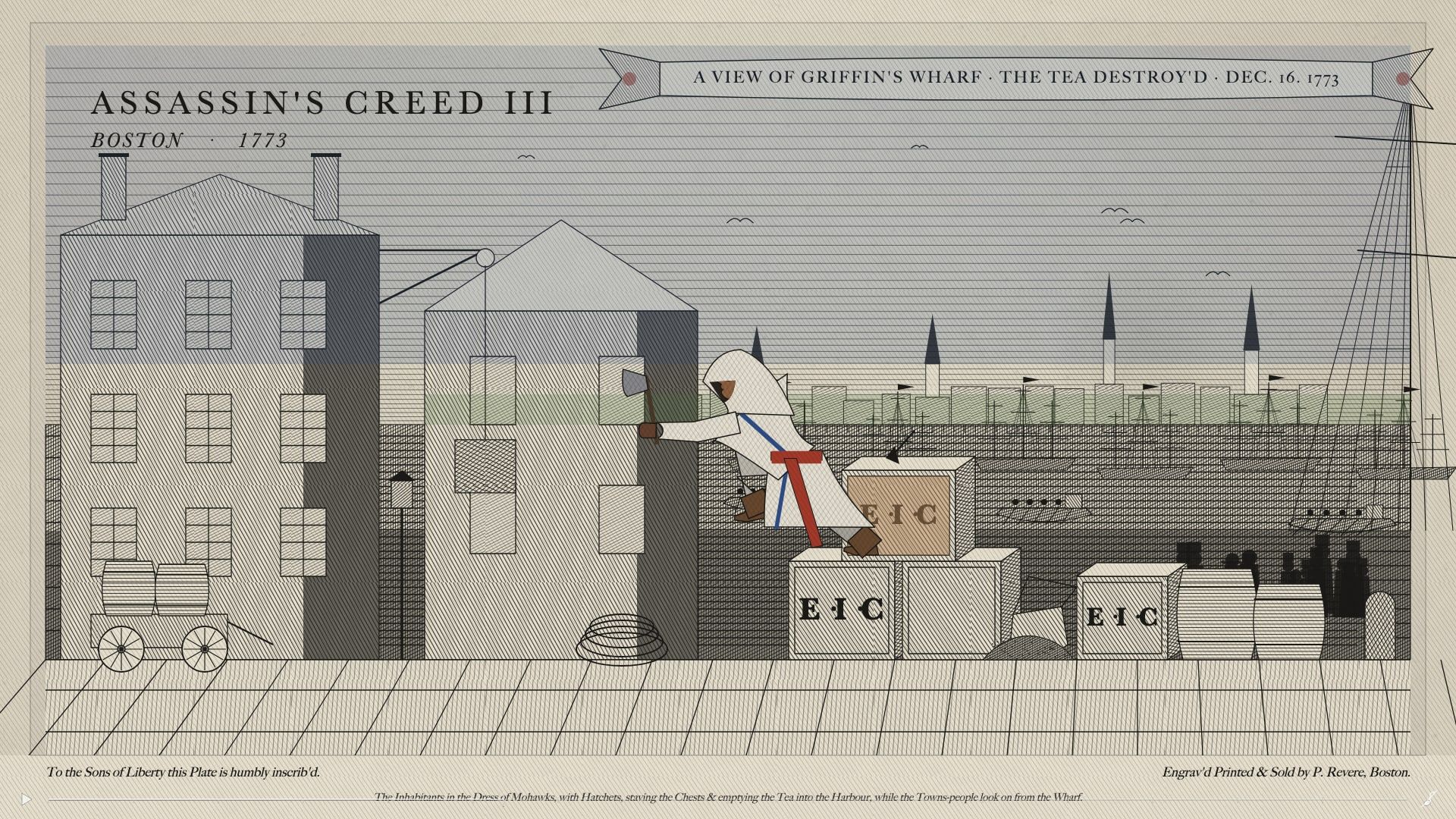
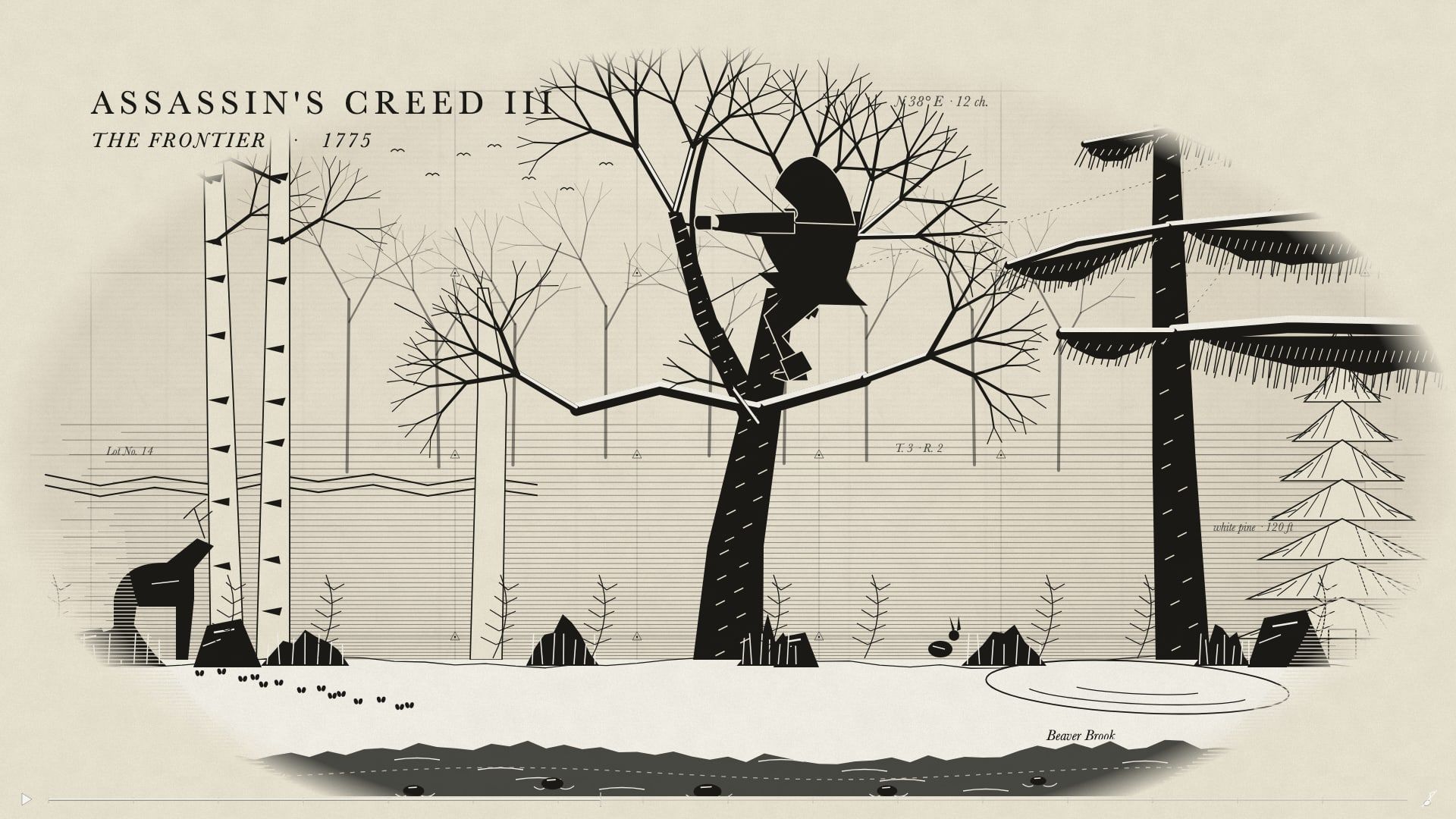
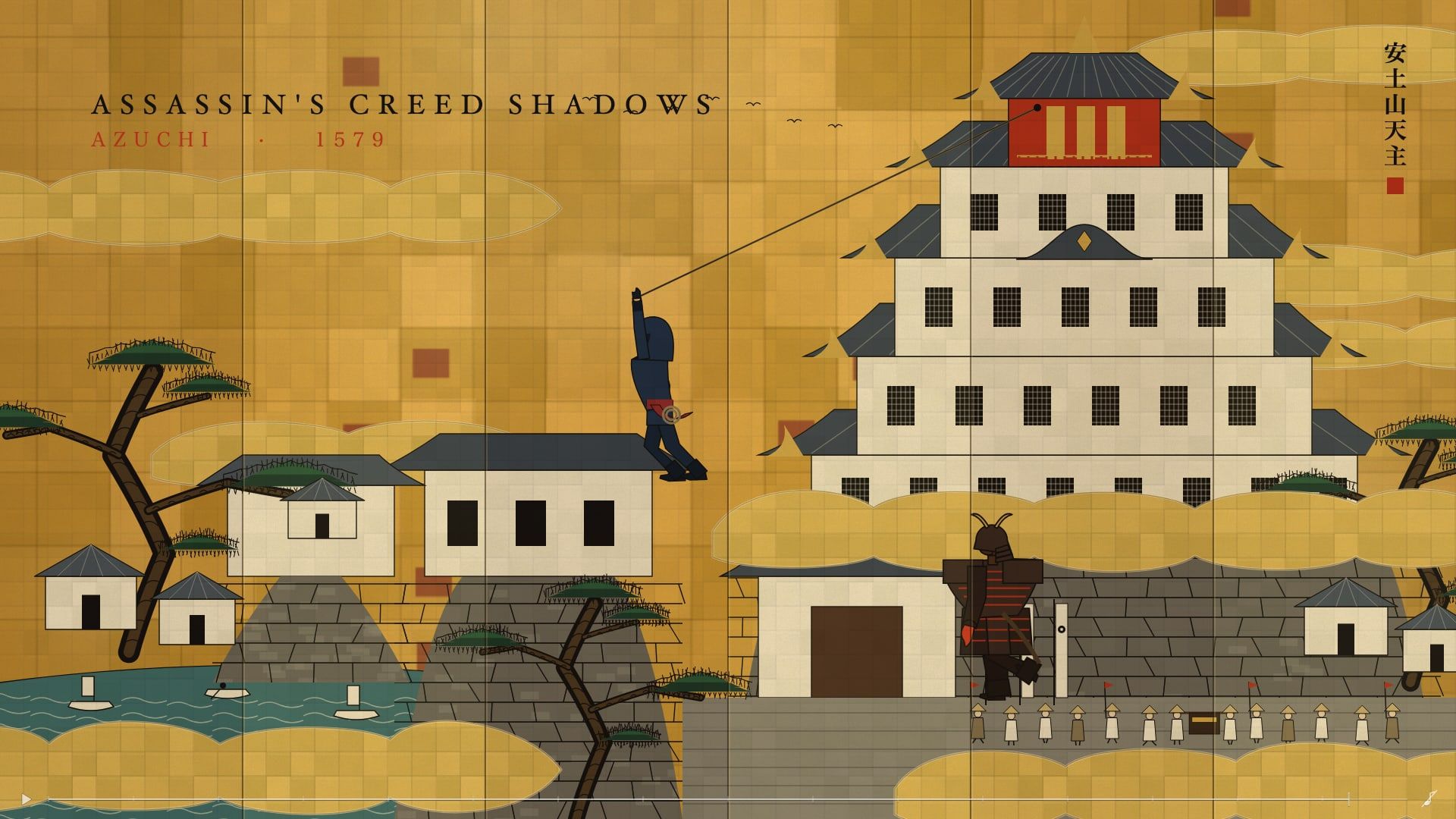
Along a seamless 67.2-second loop, one Assassin crosses sixteen pictures, each drawn in the medium its own century would have used, from Jerusalem in 1191 to Azuchi in 1579. Each picture follows the visual logic of real works: three material layers (substrate, mark-making, age), one edge policy, and one action native to that game.
Each picture is drawn in three tiers. The sixteen-up grid draws only what reads at thumbnail size; a single picture adds a fine tier of far cities, crowds, objects, inscriptions and ornament; above 1.6× a micro tier appears, down to brick joints, tile courses, craquelure and tool marks. Textures hold their screen frequency and hairlines get finer as you zoom, so enlarging a picture shows more drawing, never bigger pixels.
The protagonist is a single articulated rig with sixteen builds, gaits and costumes, rendered in each picture's medium: ink line, chalk outline, hatching, woodcut black, transparent wash, red-figure reserve. The score is synthesised in Web Audio on the same timeline: an original vocalise restated in each picture's mode over a plucked ostinato and the instruments of its period.
The sixteen pictures
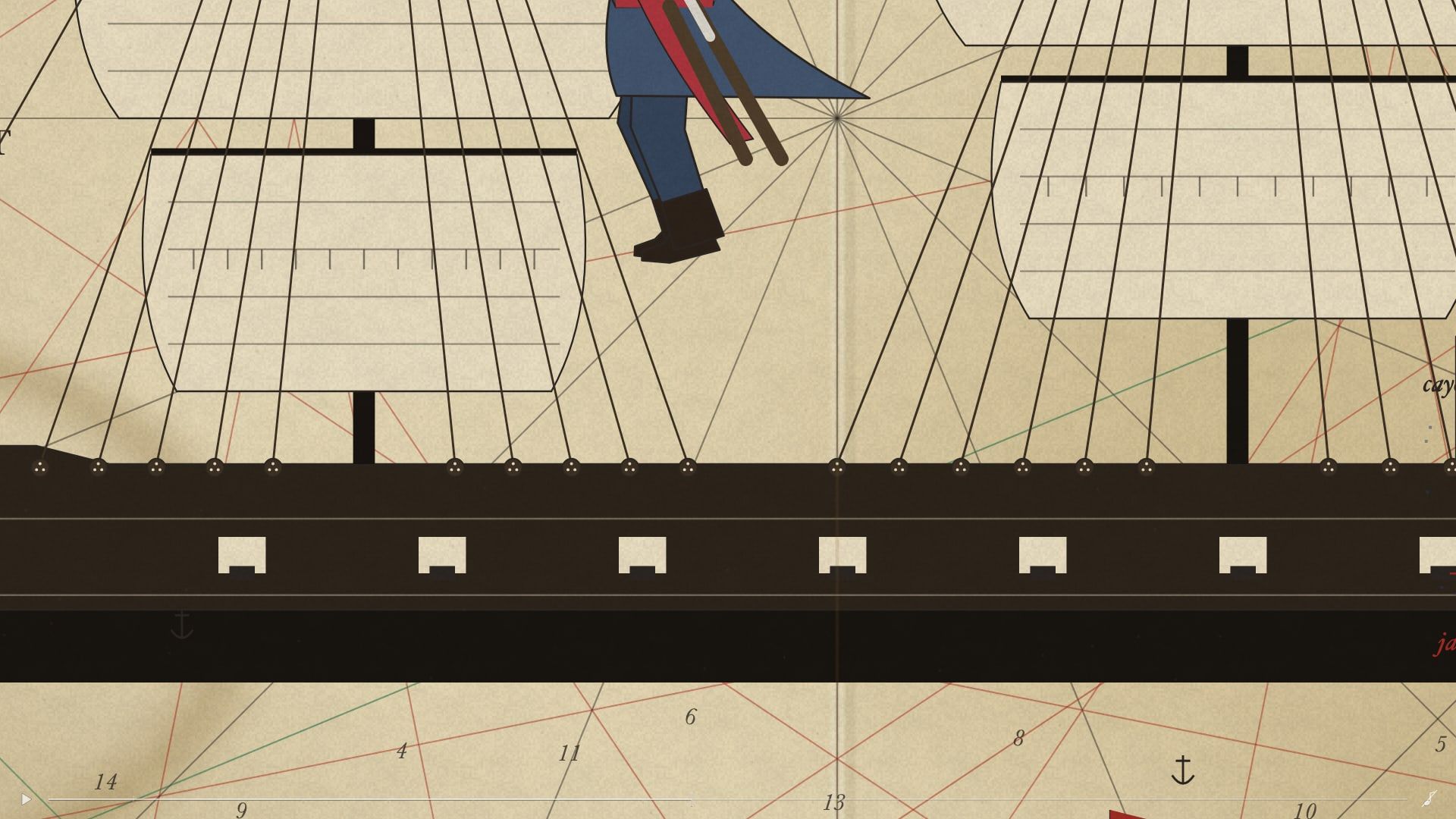
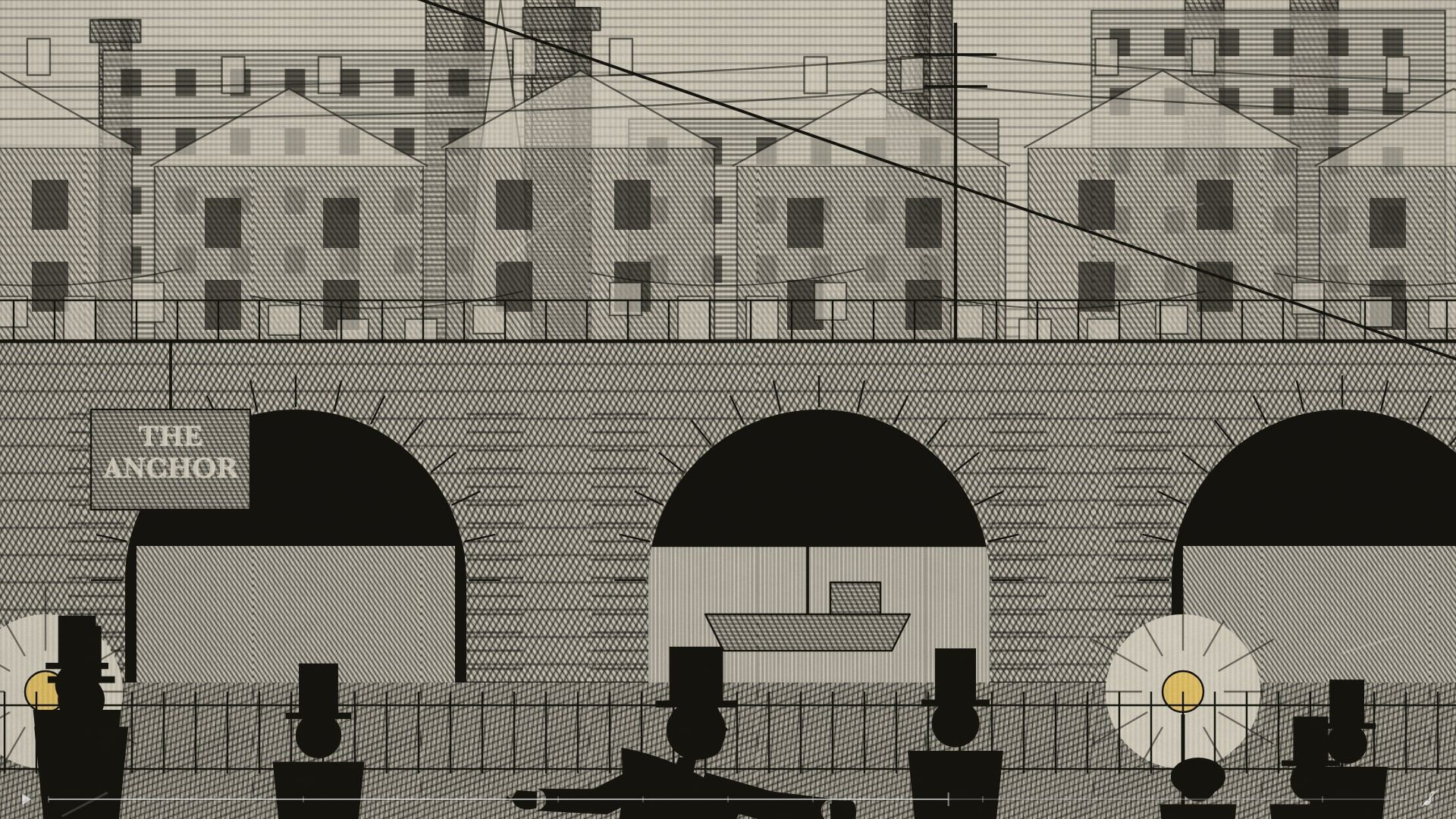
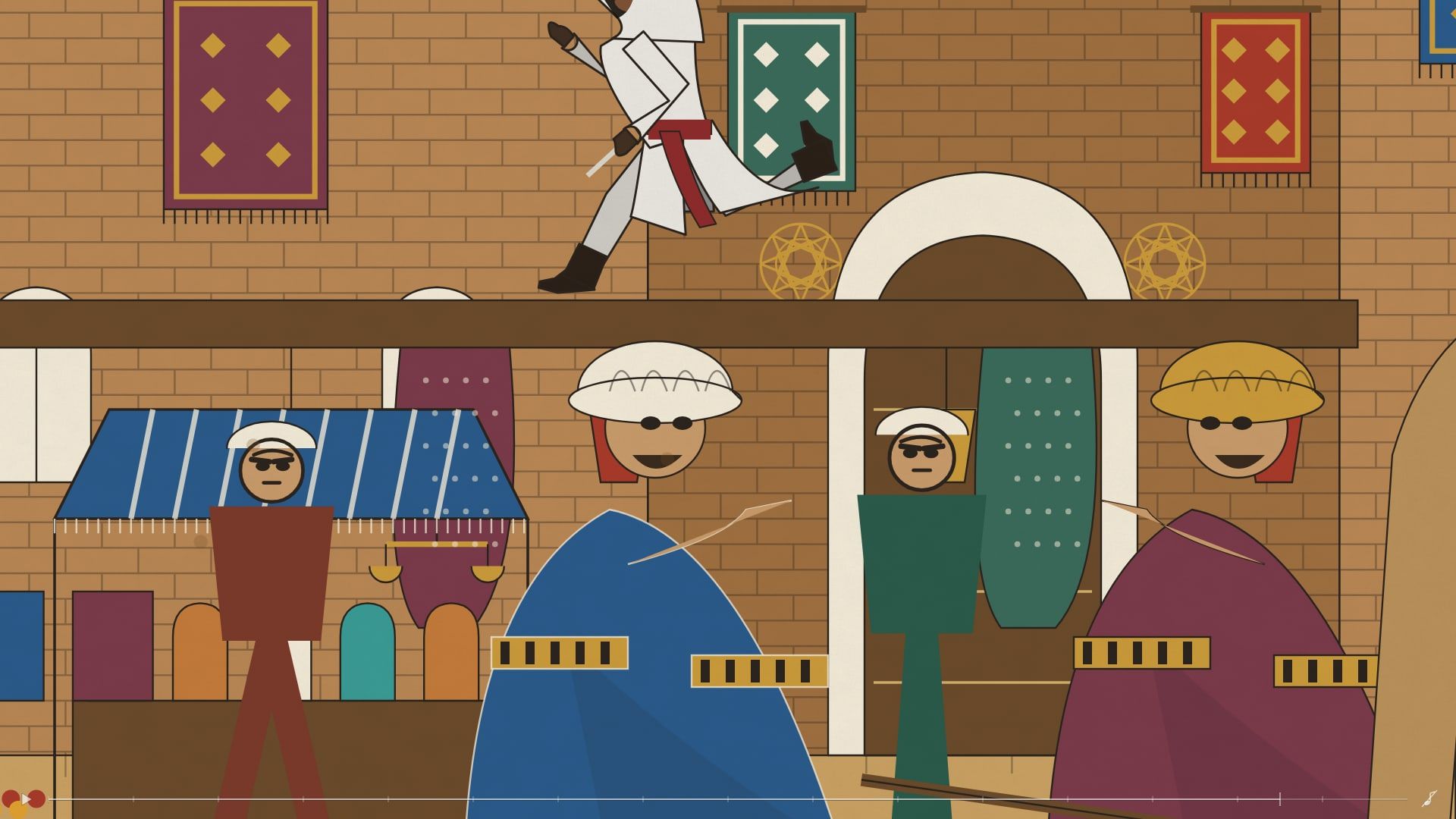
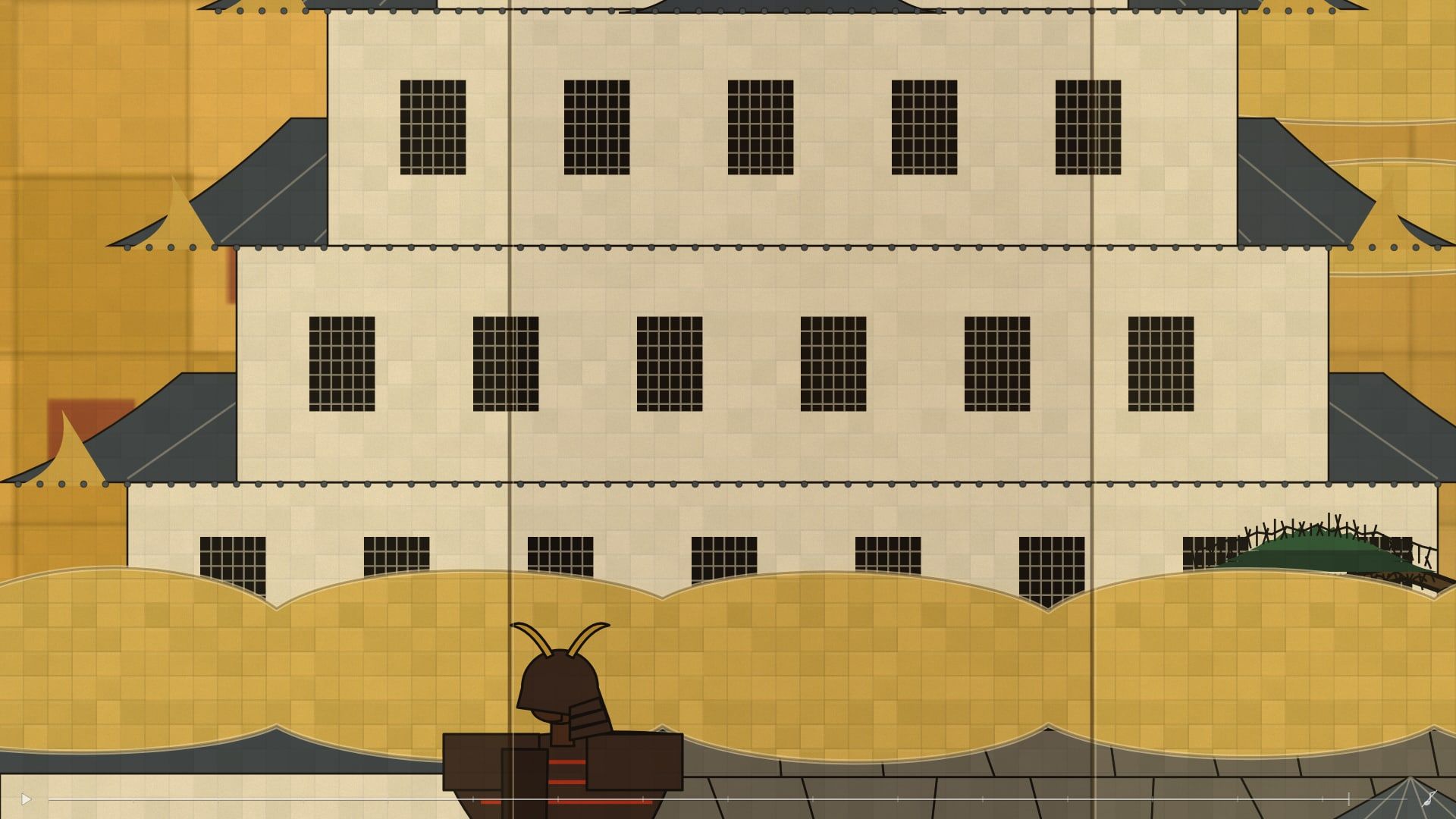
In the loop's order. Each was designed against the real works it takes its logic from: the Maciejowski Bible, Carpaccio, Matrakçı Nasuh, Paul Revere, Thomas Bewick, Battista Agnese, Gustave Doré, the Nebamun tomb-chapel, the Niobid Painter, al-Wasiti, Kanō Eitoku.
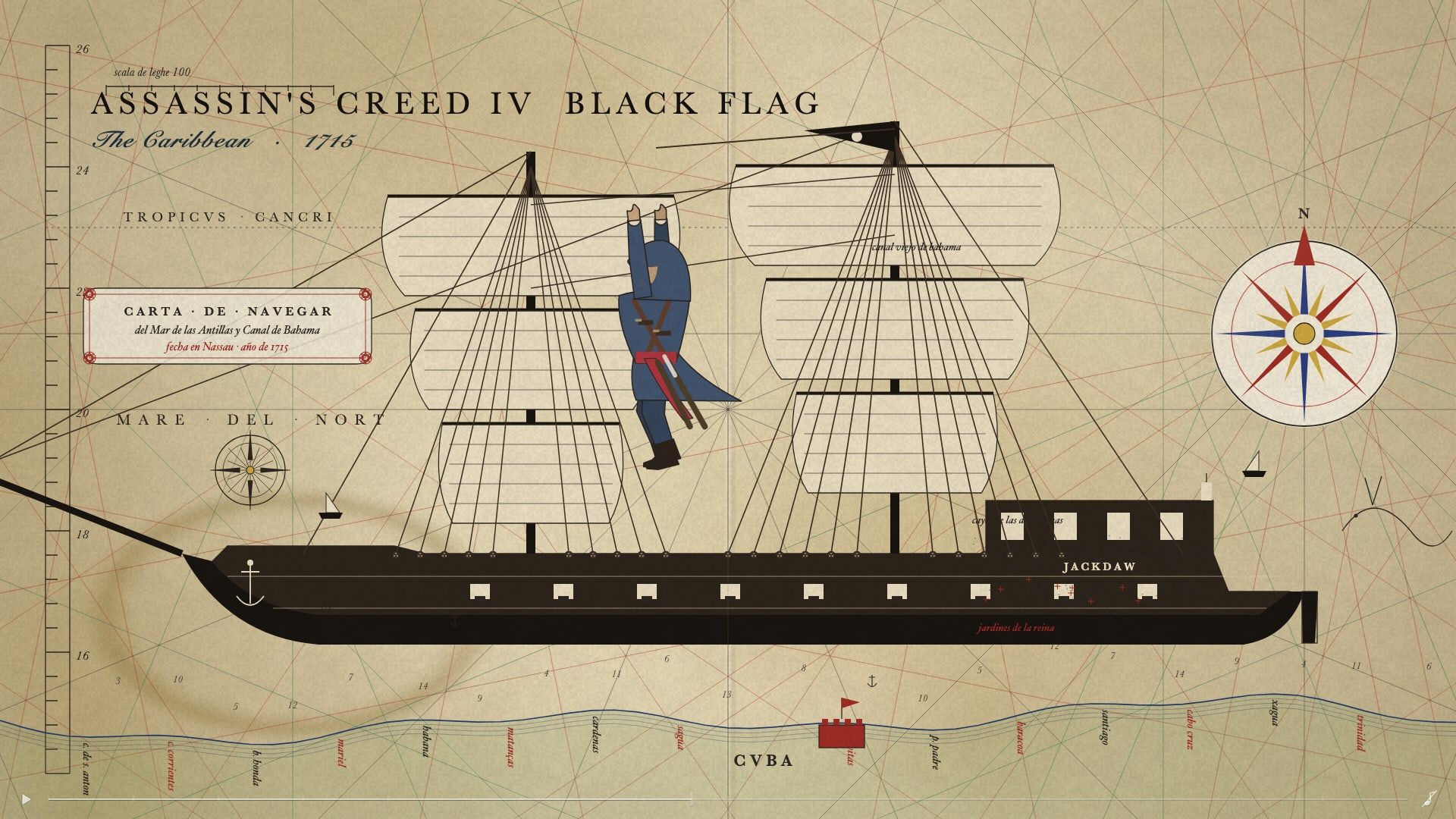
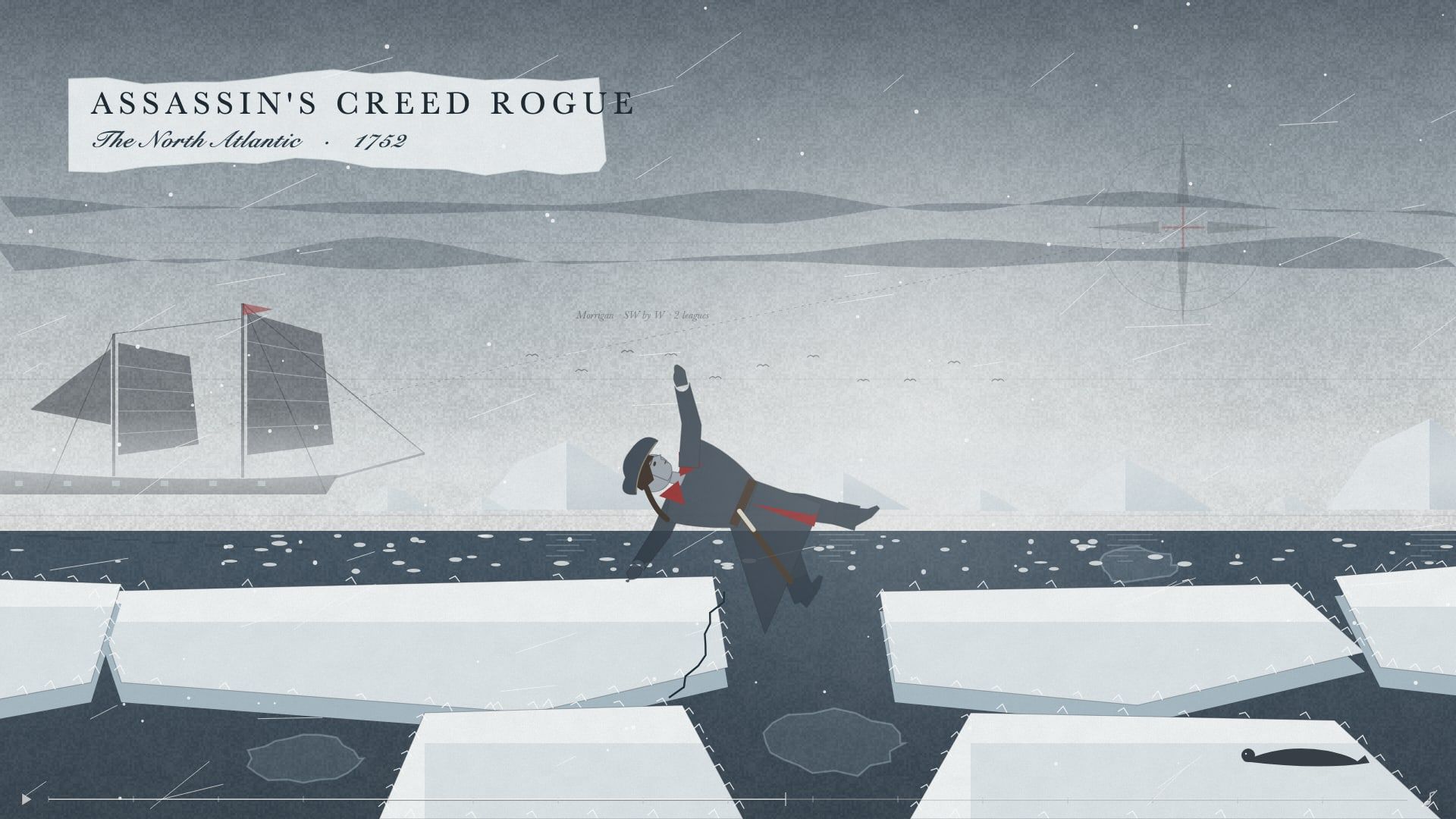
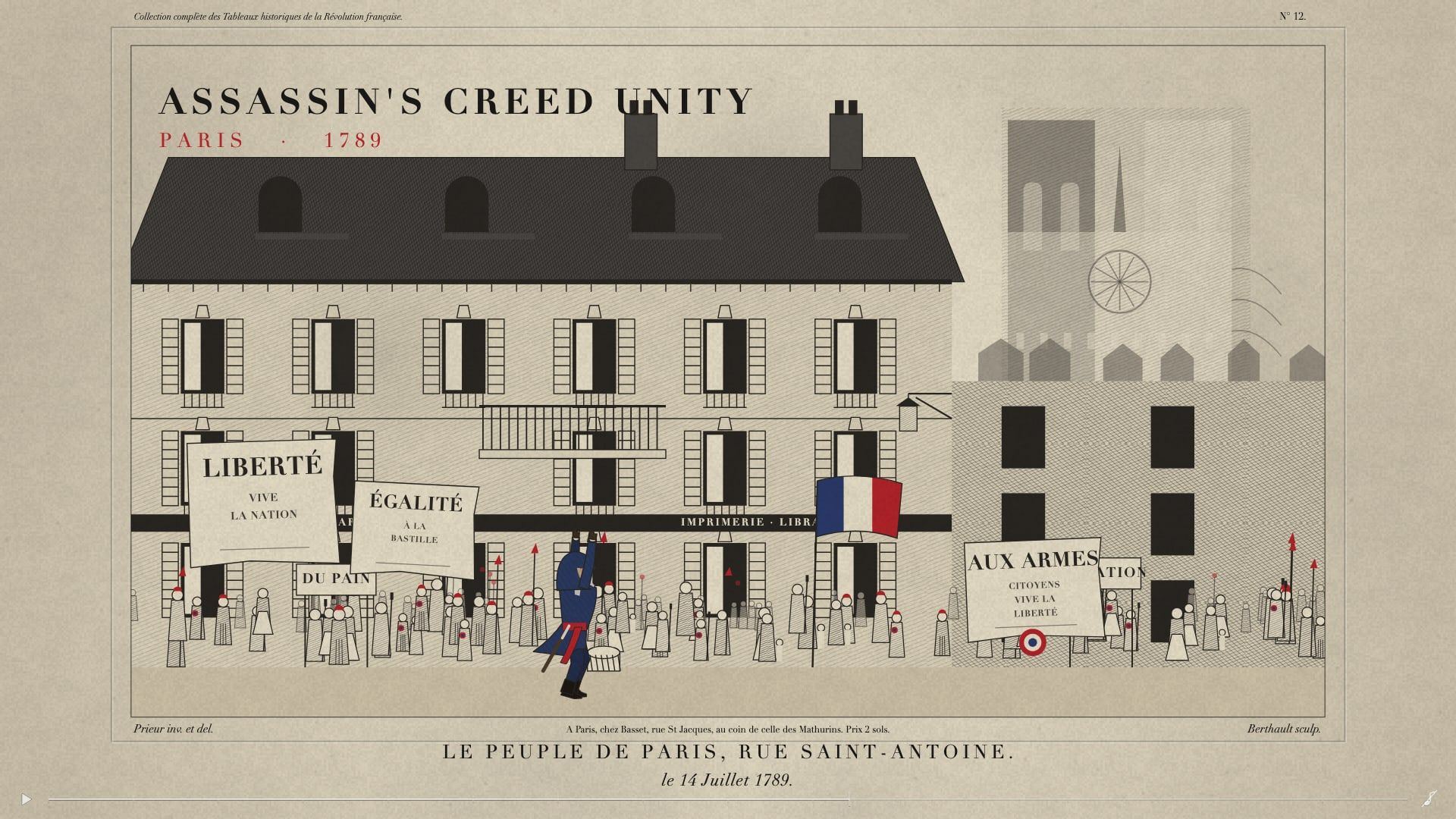
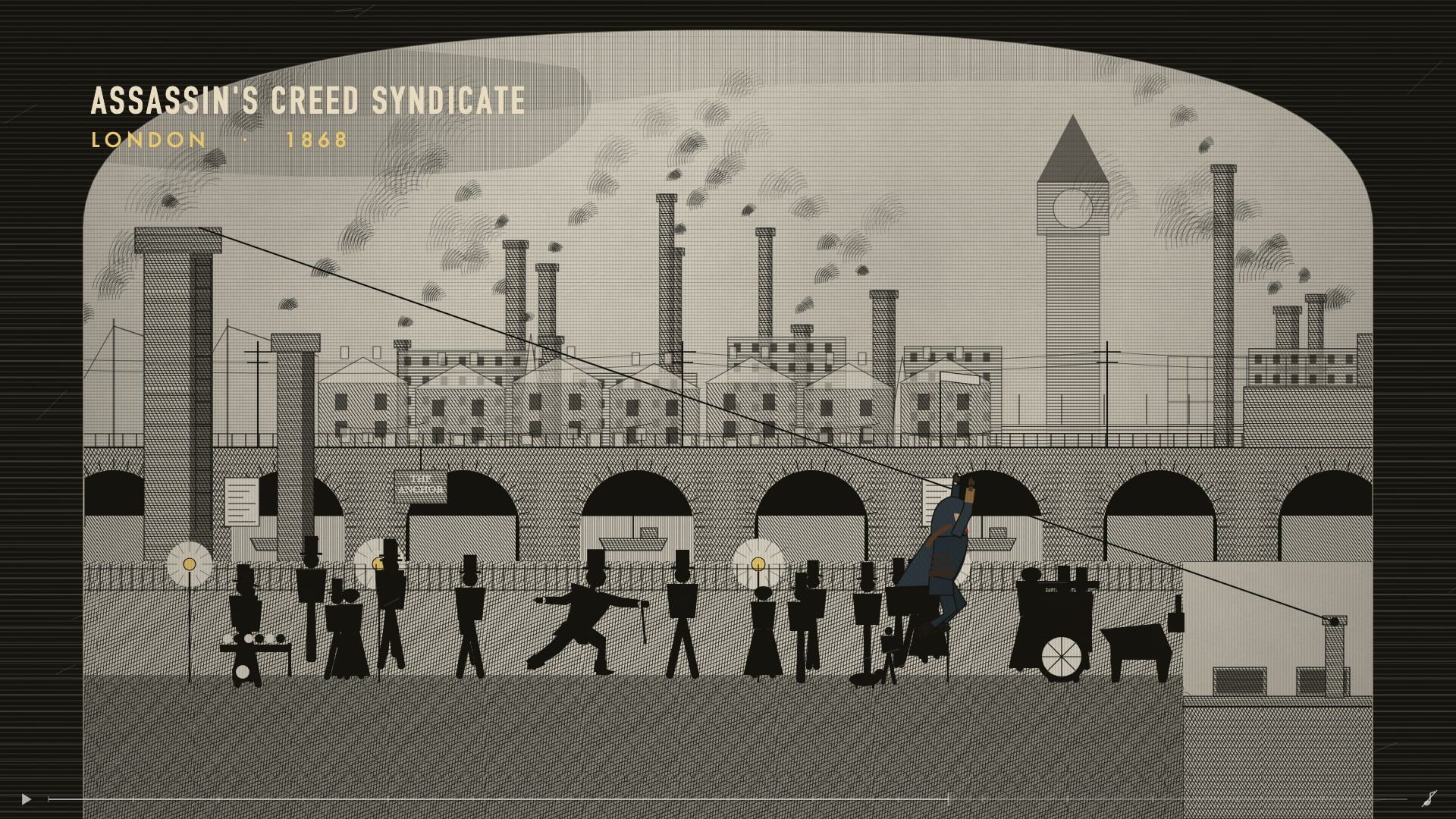
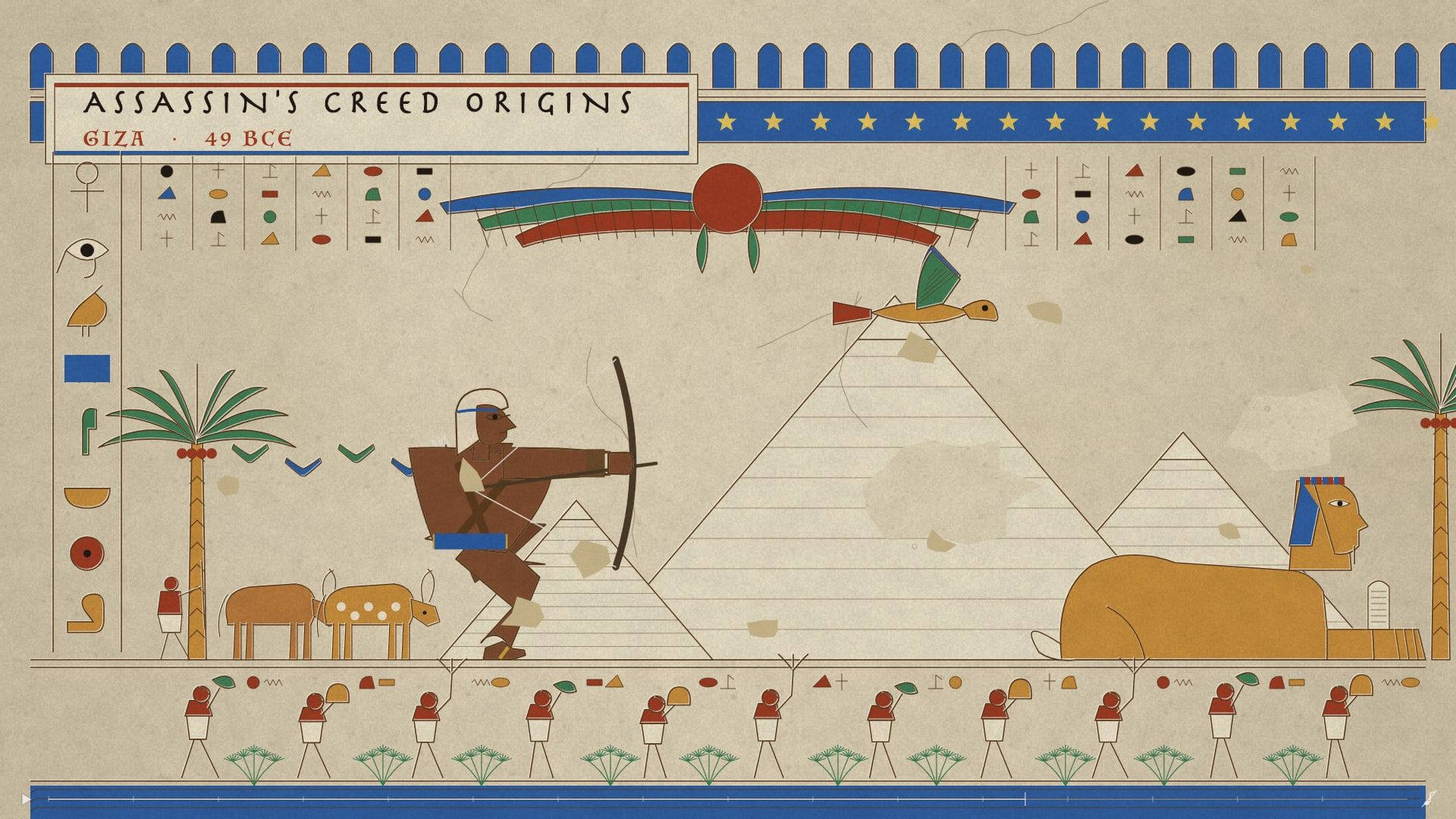
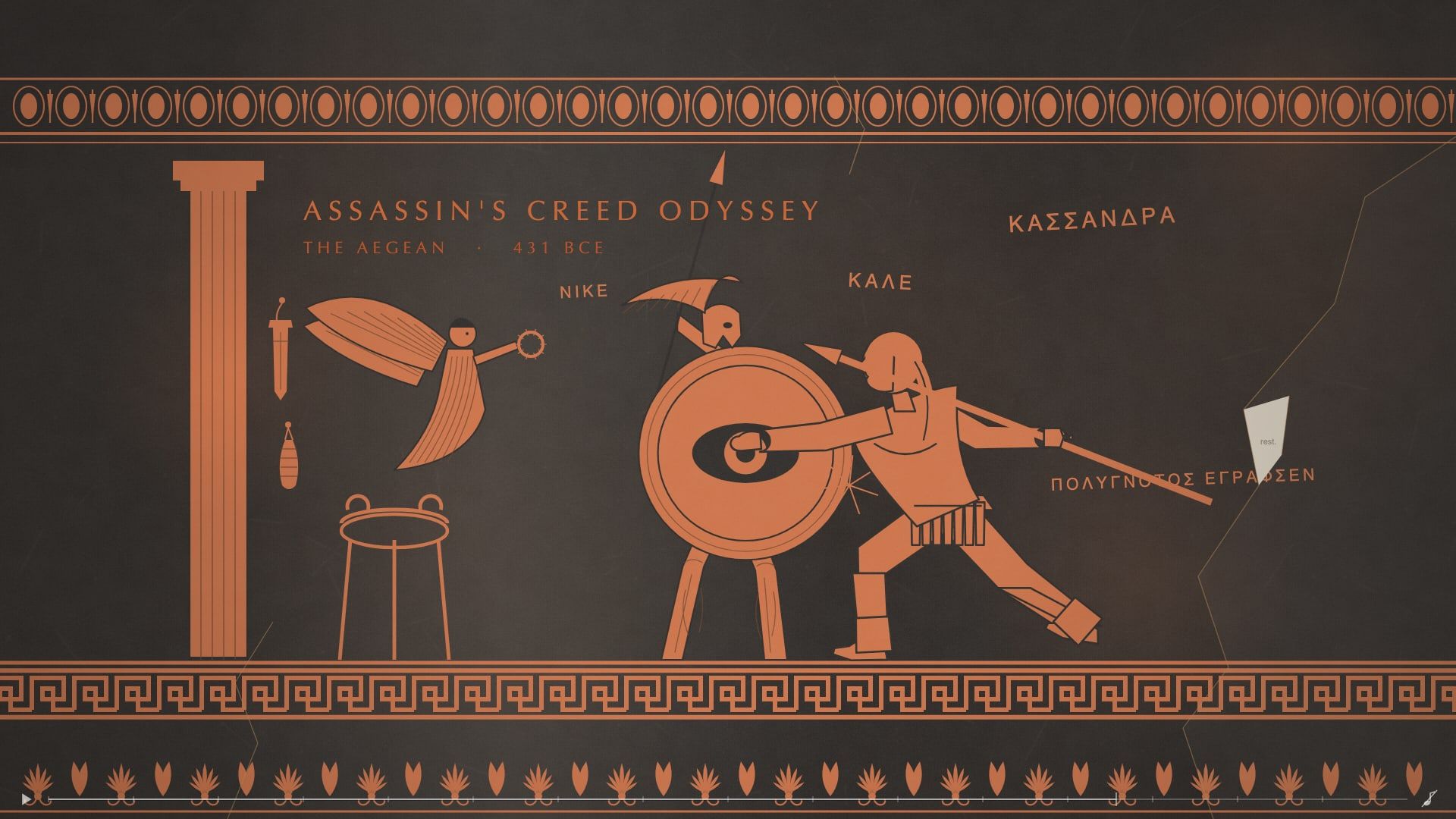
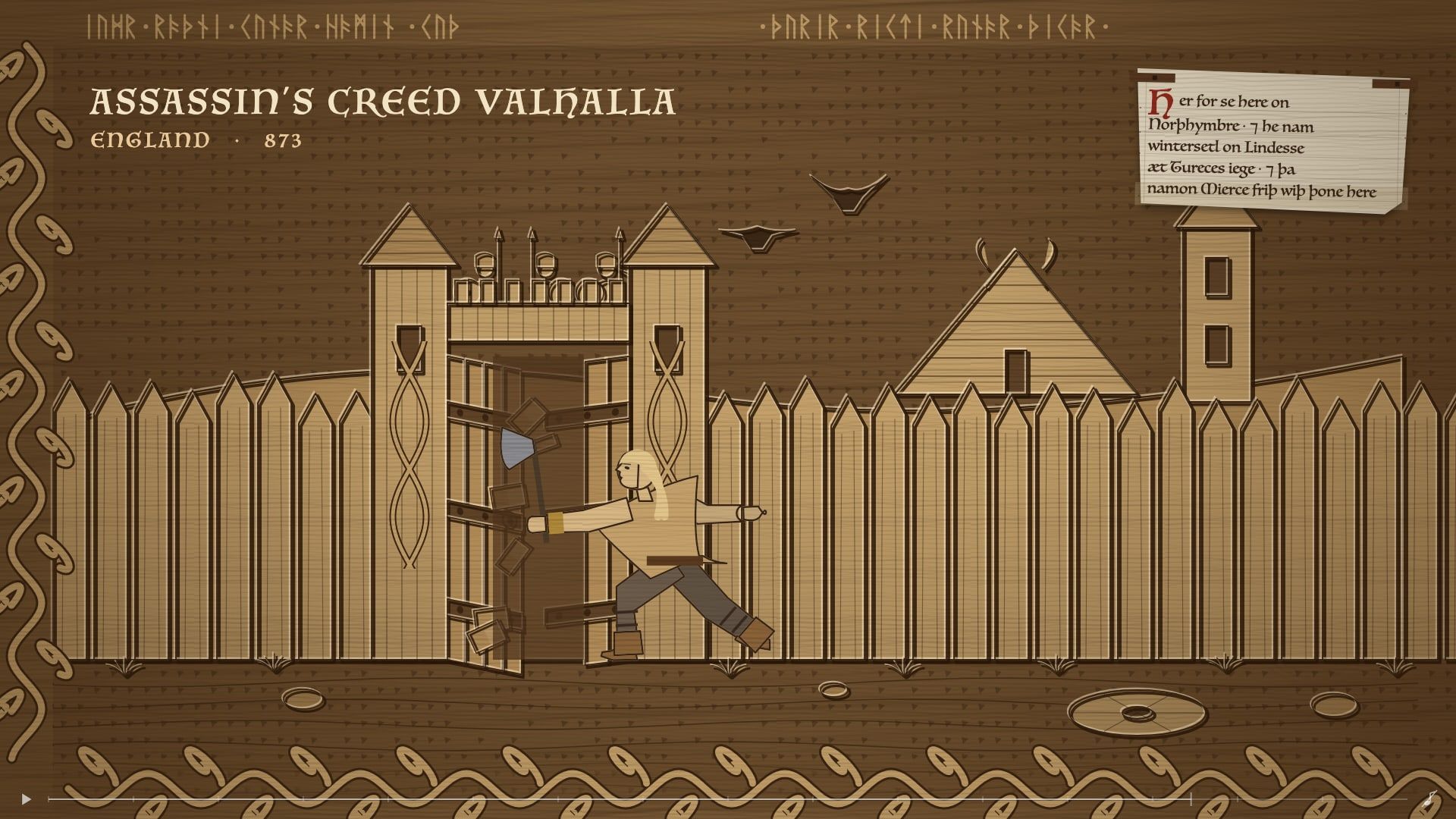
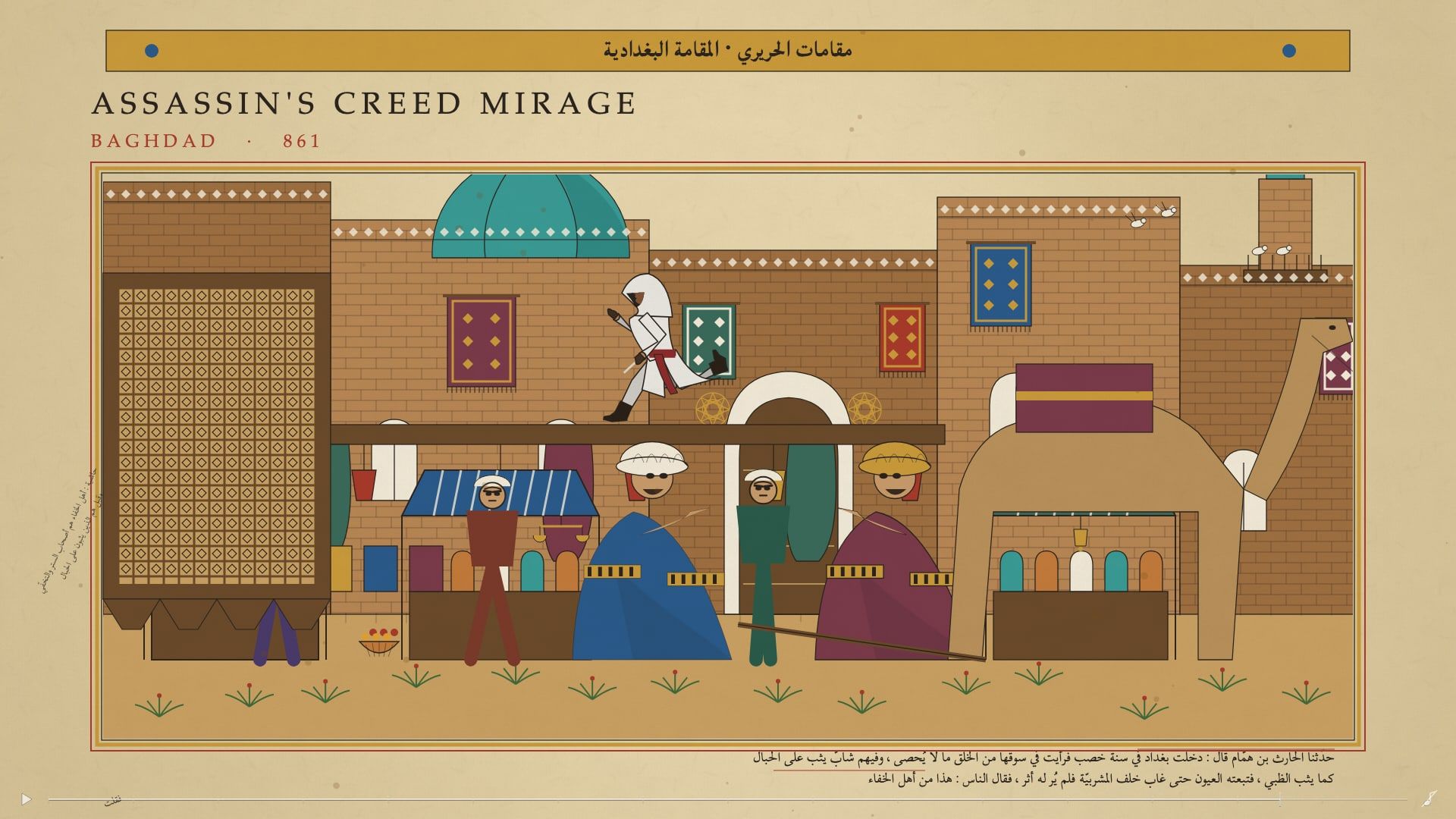
Up close
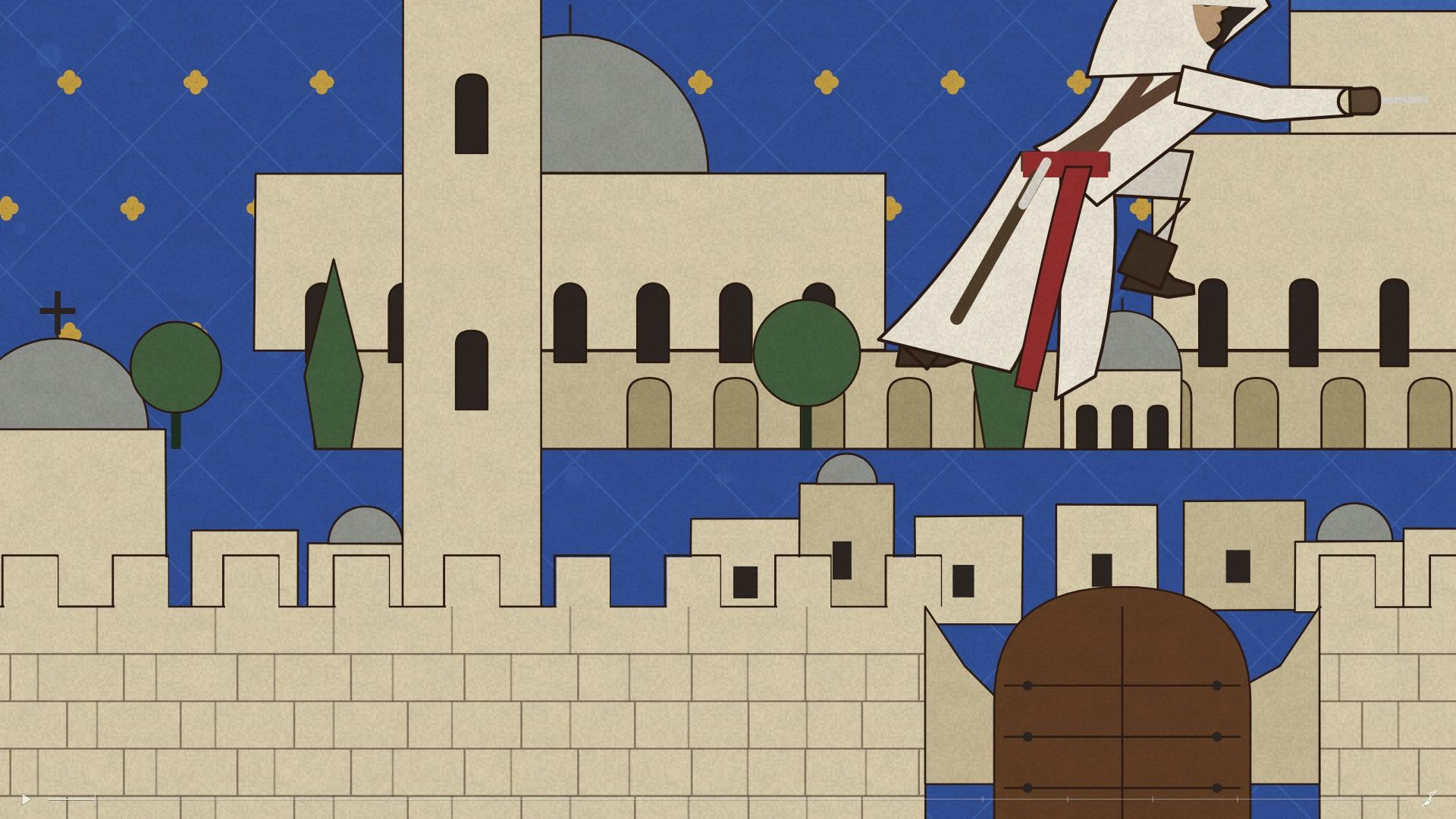
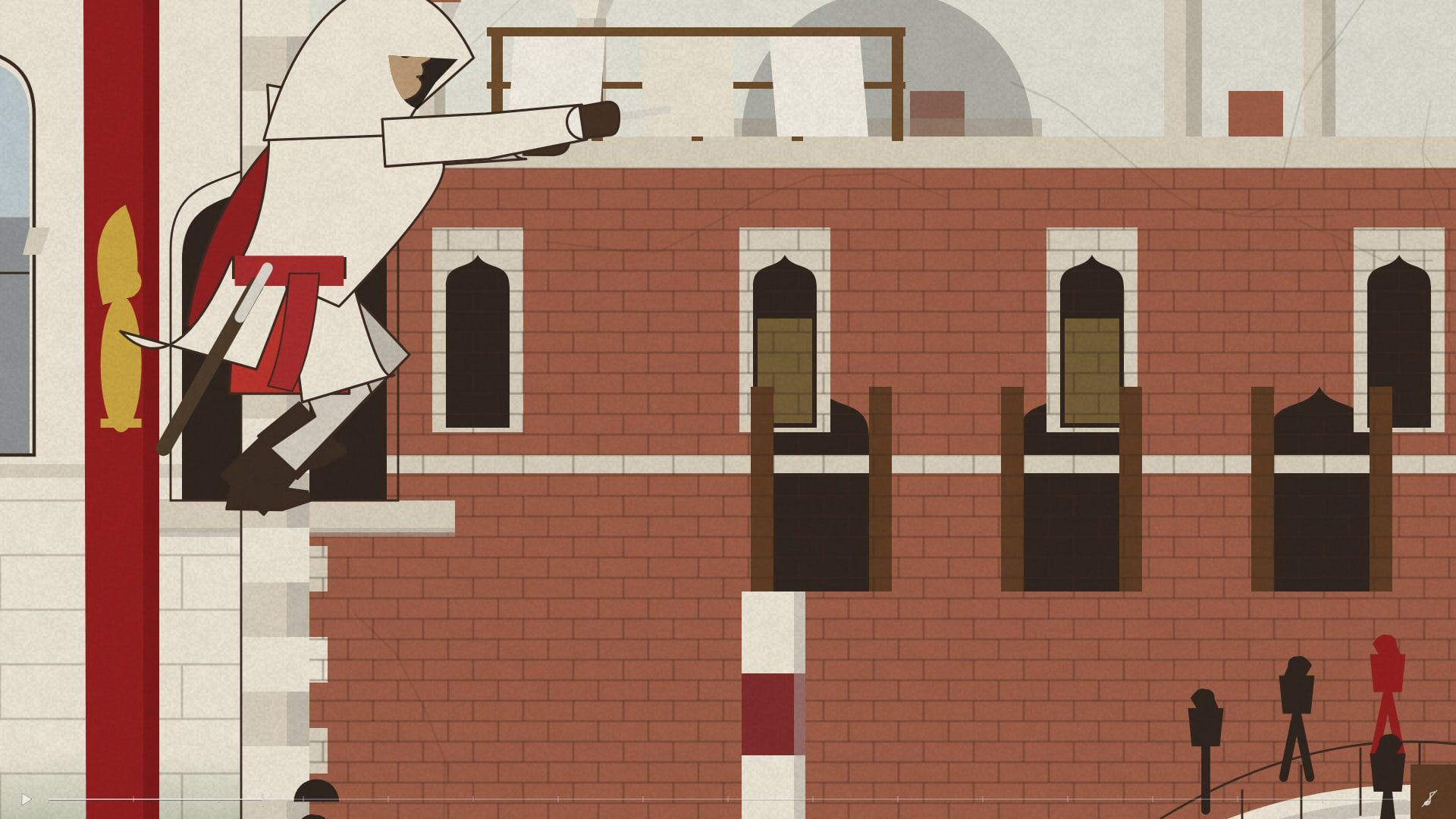
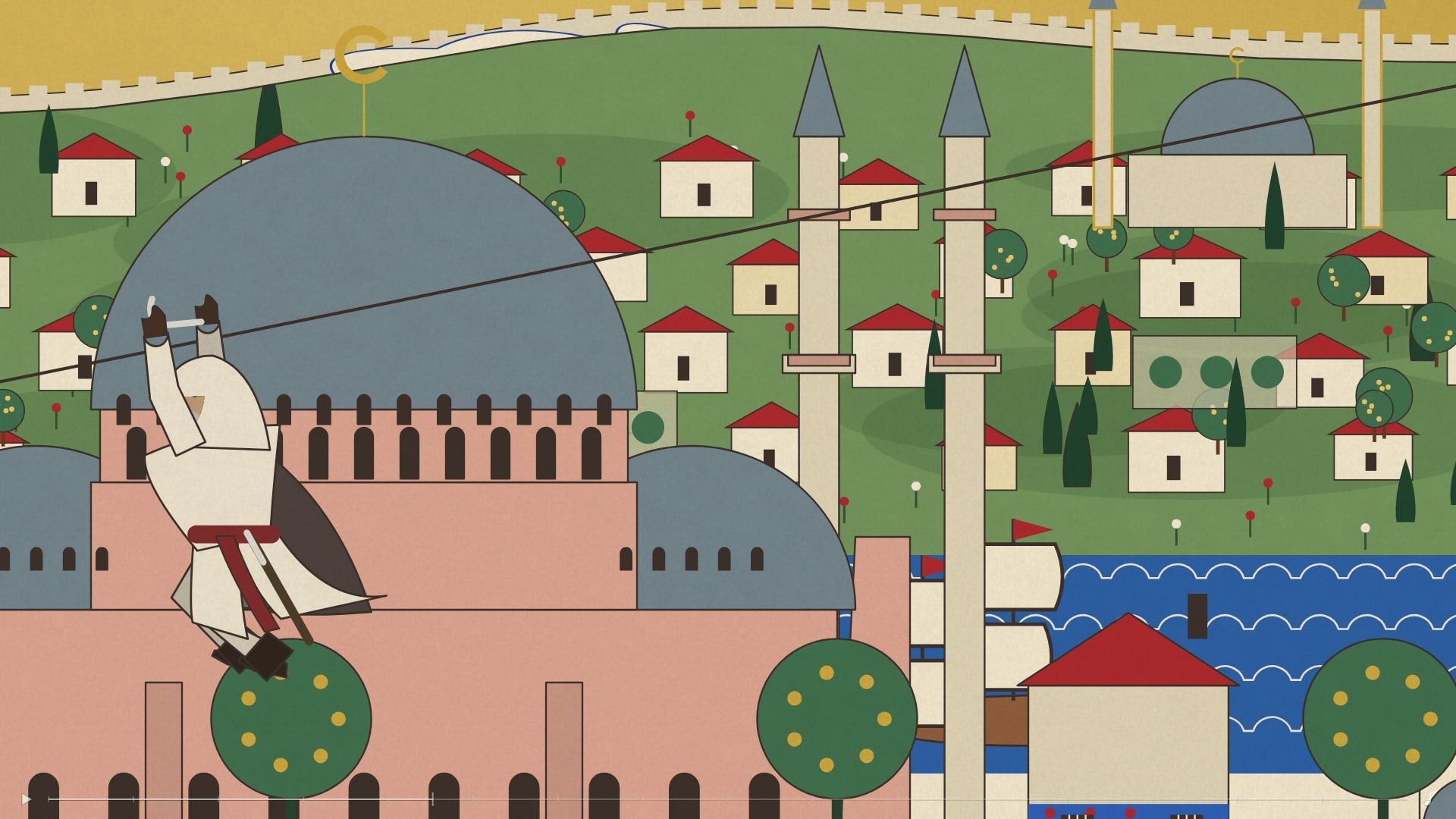
Seven of the pictures zoomed in, with the fine and micro tiers showing: what the grid leaves out, drawn for whoever leans in.
The figure
One skeleton with a neck, a waist, tapering limbs, heeled feet and hands that grip, posed by blending between keys, its cloth trailing its speed. Each of the sixteen protagonists has their own build, gait and kit, and the same rig is drawn in sixteen media.
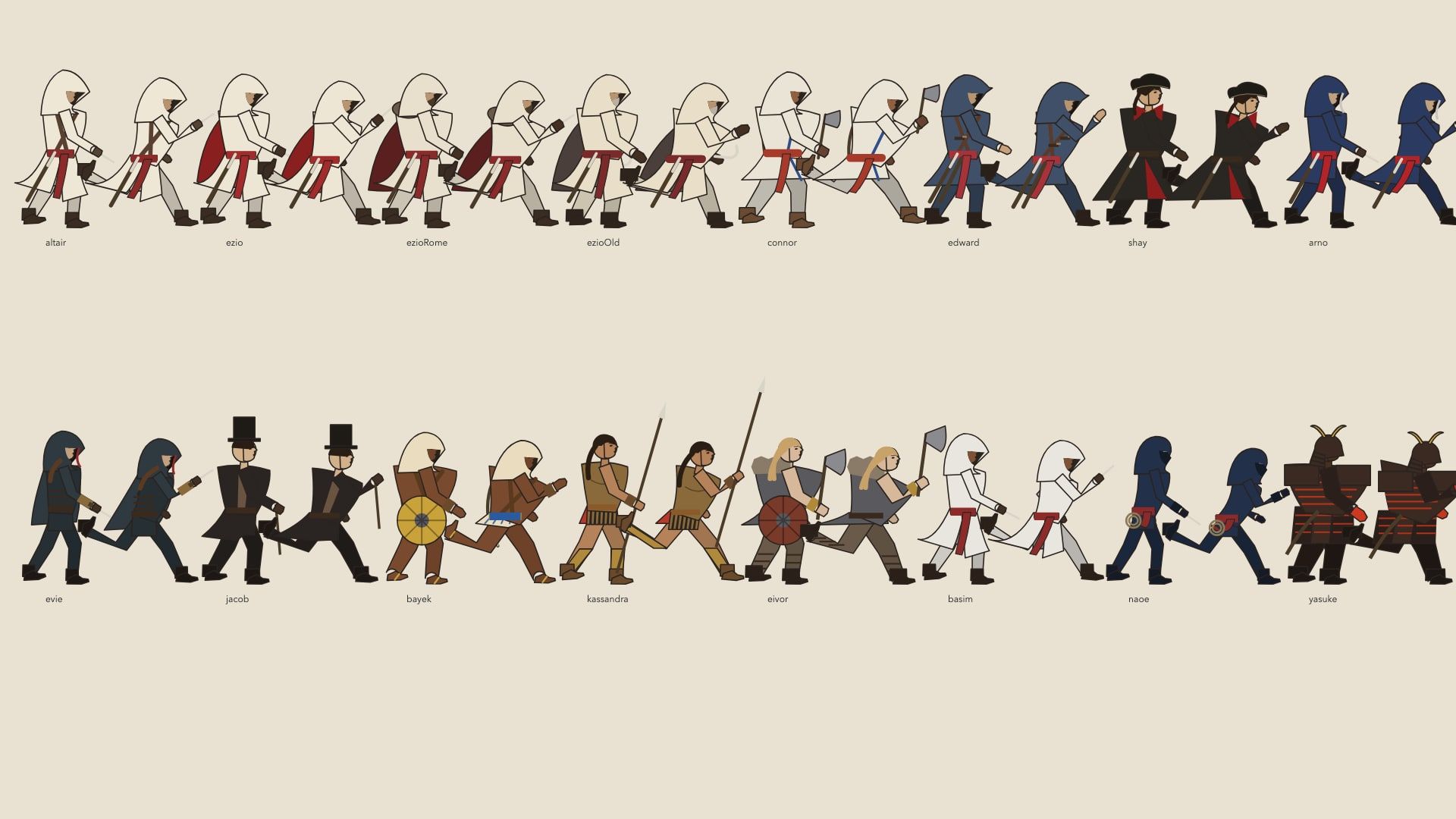
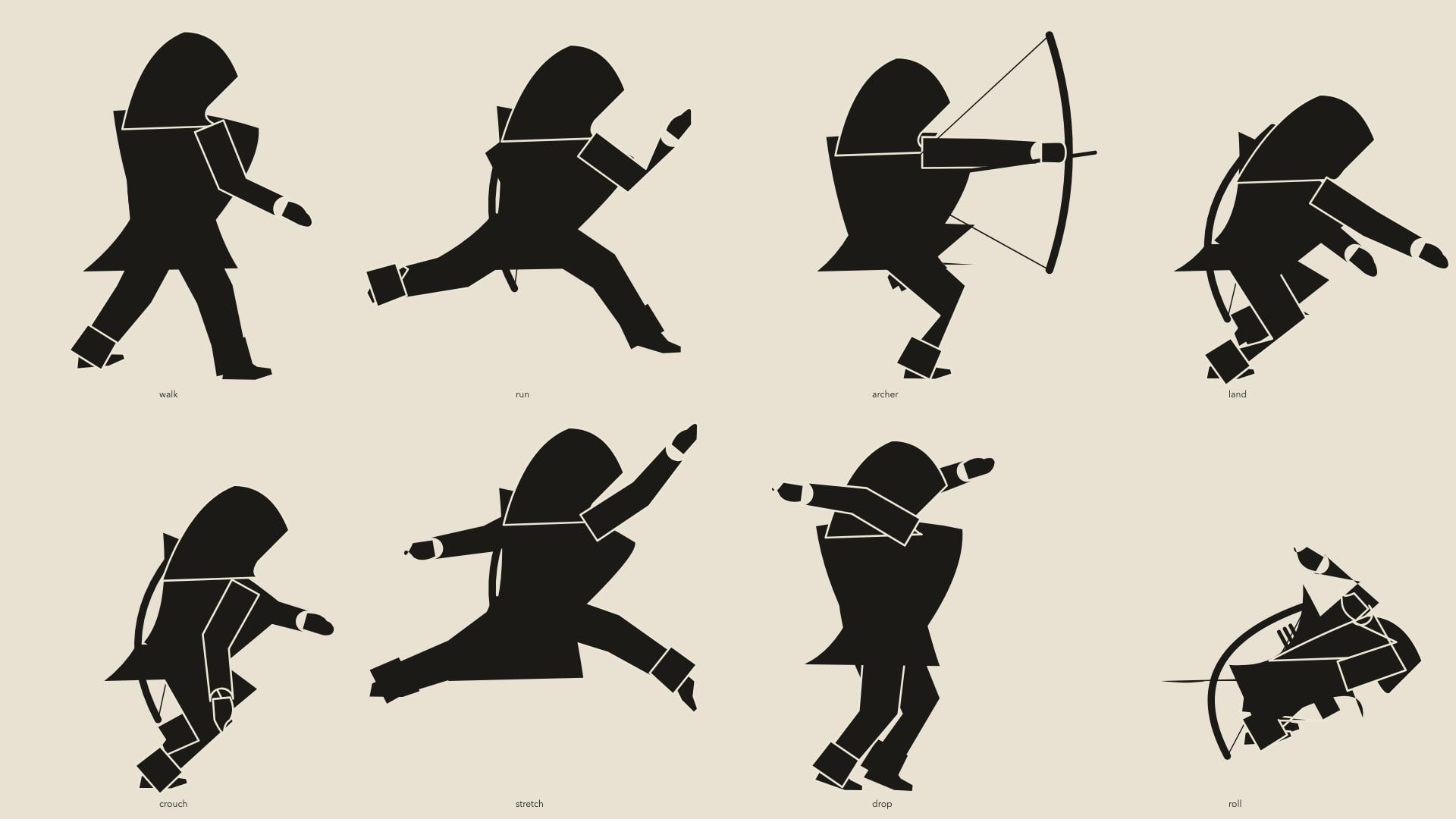
Every picture in the medium its own century would have used.
Runs in the browser. Sound starts at your first click or key.
Enter the work